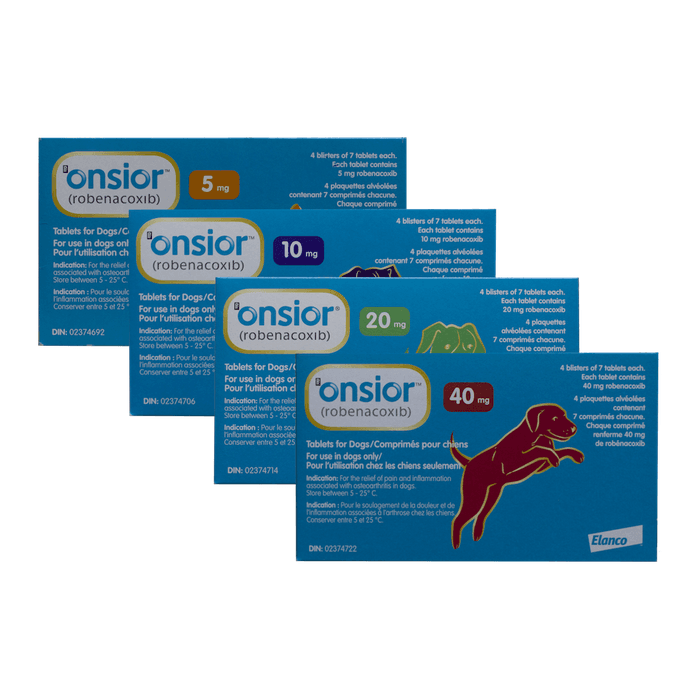
Onsior for Dogs is a prescription non-steroidal anti-inflammatory drug (NSAID) used to relieve pain and inflammation caused by conditions such as osteoarthritis or after surgery. It contains robenacoxib, which helps reduce swelling, stiffness, and discomfort in a way that’s generally gentle on the stomach.
Benefits
- Effectively reduces pain and inflammation
- Commonly used for osteoarthritis and post-operative pain
- Easy once-daily dosing
- Flavored tablets for easier administration
- Fast-acting with visible improvement often within hours
Dosage
- For dogs 2.5 kg and over, aged at least 4 months
- Recommended dosage is 1 mg/kg once daily, up to a maximum of 2 mg/kg/day
- Use the correct tablet strength based on your dog’s weight:
- 5 mg tablet for dogs weighing 2.5–5.5 kg
- 10 mg tablet for dogs 5.6–10 kg
- 20 mg tablet for dogs 10.1–20 kg
- 40 mg tablet for dogs 20.1–40 kg
- Administer once daily, for up to 7 days (in surgical cases) or as prescribed by your veterinarian
- Give with or without food, but at the same time each day
- Tablets should not be split or crushed
- Always follow the dosage and duration advised by your vet
Warnings and Precautions
- Not for use in cats or dogs under 2.5 kg or under 4 months of age
- Do not use with other NSAIDs or corticosteroids
- Use with caution in dogs with liver, kidney, heart, or gastrointestinal conditions
- Not recommended for pregnant, breeding, or lactating dogs
- Tell your vet about any other medications or health conditions before use
How to Use
- Give the whole tablet orally once a day
- Can be given with or without food
- Ensure your dog has access to clean drinking water
- Complete the prescribed course even if your dog appears better
- Observe for any side effects and report concerns to your vet
Storage
- Store at room temperature (15–30°C / 59–86°F)
- Keep tablets in their original blister packaging
- Keep out of reach of children and pets
Side Effects
- Common: vomiting, soft stools or diarrhea, decreased appetite
- Possible: lethargy, behavior changes, increased thirst
- Serious (contact vet immediately): black/tarry stools, yellowing of eyes or gums, seizures, signs of allergic reaction (swelling, hives, trouble breathing)